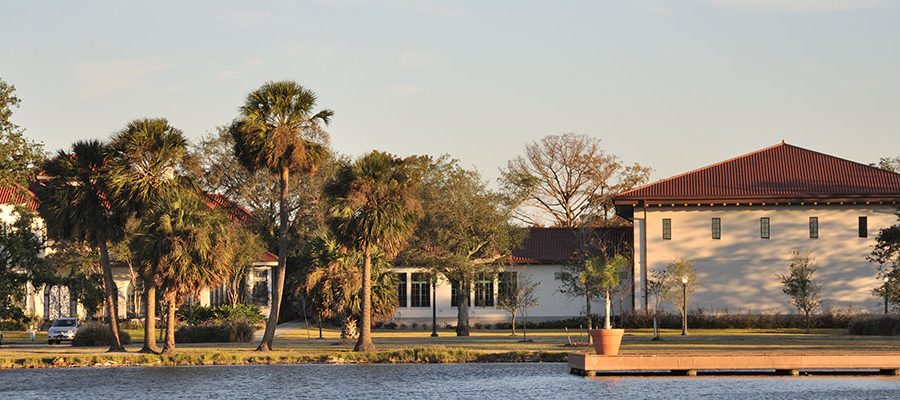
Christian Brothers School Renovation + Addition
New Orleans, Louisiana

New Orleans, Louisiana

Port Sulpher, Louisiana
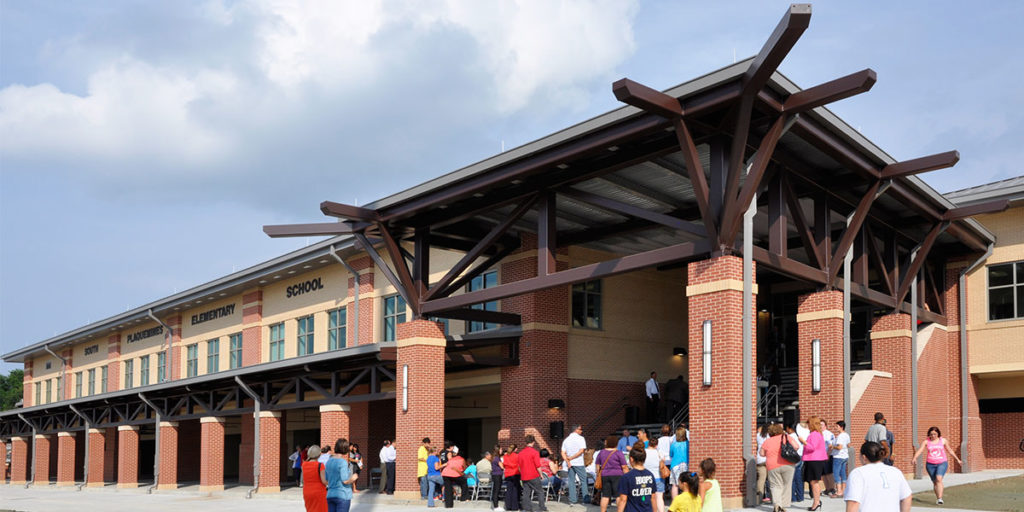
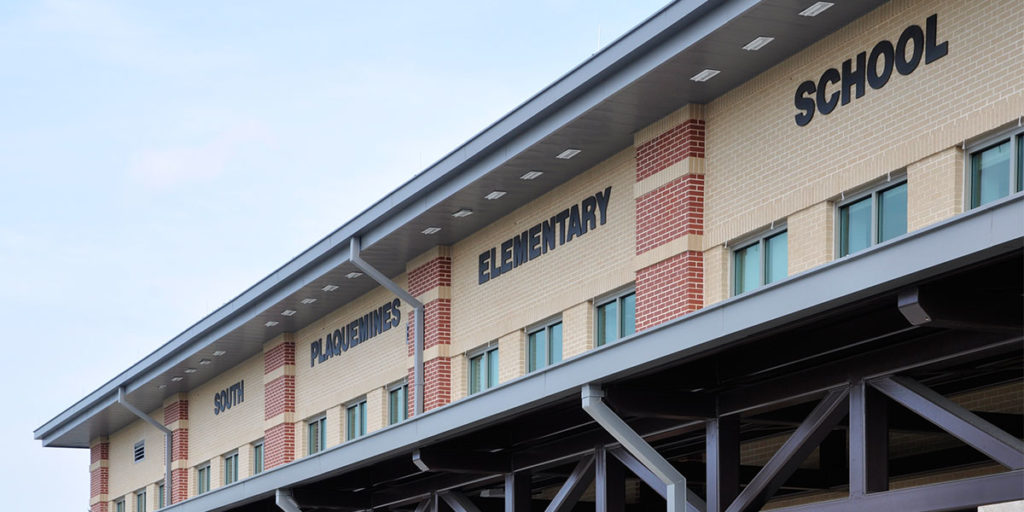
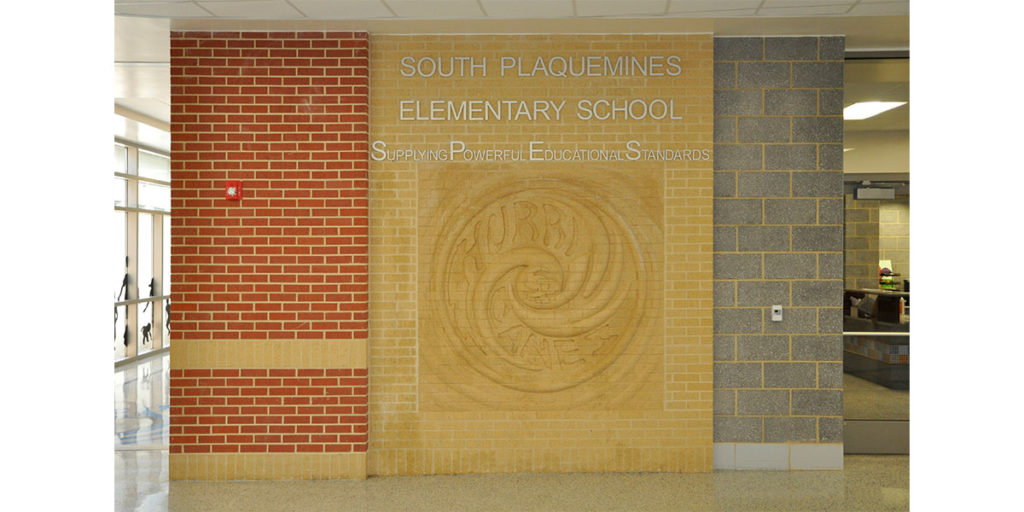
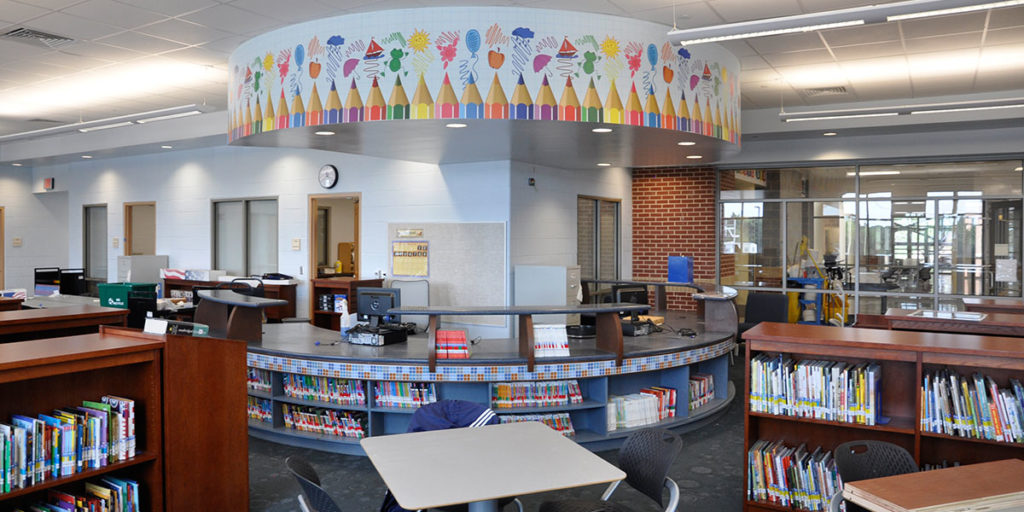
VergesRome Architects designed the South Plaquemines Elementary School in Port Sulphur, for the comprehensive hurricane recovery and mitigation plan developed by the Plaquemines Parish School Board and funded by FEMA. Designed to comply with FEMA’s strict mitigation requirements, the new $30.9 Million, 105,054 SF school, serving 870 students in Pre-Kindergarten through Sixth Grade, is a two-level structure raised 18’ above grade to mitigate future flooding. The ground level, with no occupied space, provides access to the zones above via stairways, ramps, and elevator.
The school’s ‘public’ side has the student drop-off area for autos, and ramp for visitor access to sports events in the Gym, school events, and meetings in the adjacent Cafeteria, Library/Media Center or Faculty Offices. The opposite side has the school bus loading zone, with entry to the school by stairs for older students, and by ramp for younger students. Columned arcades along Ground Level on both sides of the building visually lessen the huge void created by the building’s high elevation above grade.
Four activity zones comprise the floor plan: Classrooms; Cafeteria and Gymnasium Administrative/Faculty; and Library/Media Center/Conference space. Students in Pre-K – Second Grade attend classes on the second level while students in Grades 3 – 6 attend class on the third level. Strategically placed stairwells direct student traffic flow away from classrooms to reduce noise infiltration.
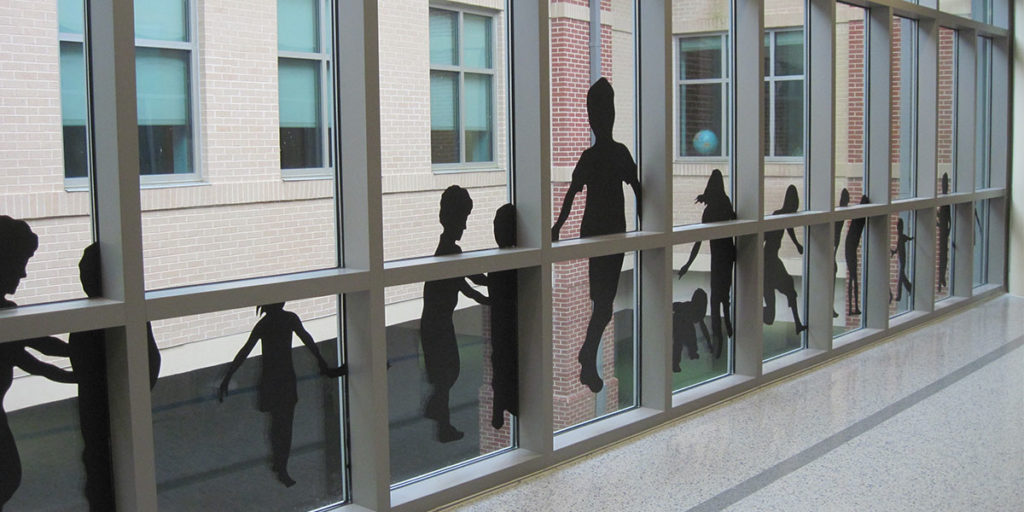
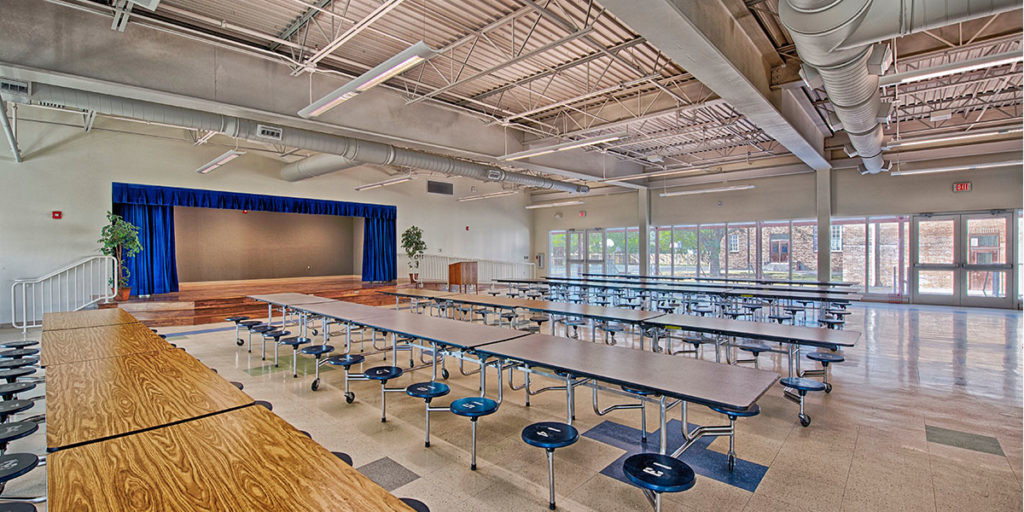
The placement of public areas in the Cafeteria/Gym and Library zones allows classrooms and offices to remain secured during after-school events. A partitioned stage between Gymnasium and Cafeteria allows simultaneous events in both spaces, and can be opened to provide a single, large performance stage. The cafeteria is an open 2-story space with clerestory windows bringing natural light deep into the interior, and its glass interior façade opens to a compact 2-story Commons Area with light well to allow more natural daylighting into Commons and Classroom corridors.
The school opened its doors to students and their families, faculty and staff, in time for the 2014-2015 school year.
Marrero, Louisiana
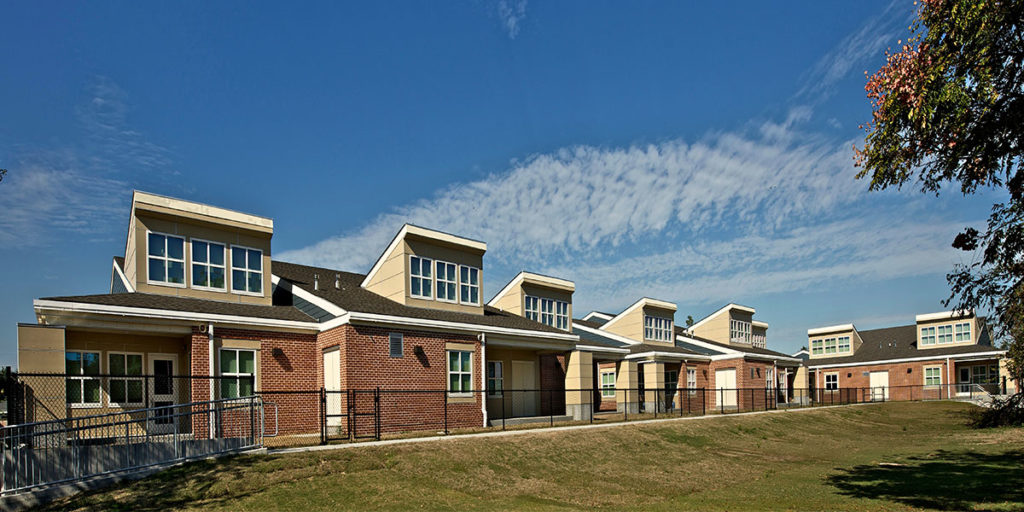
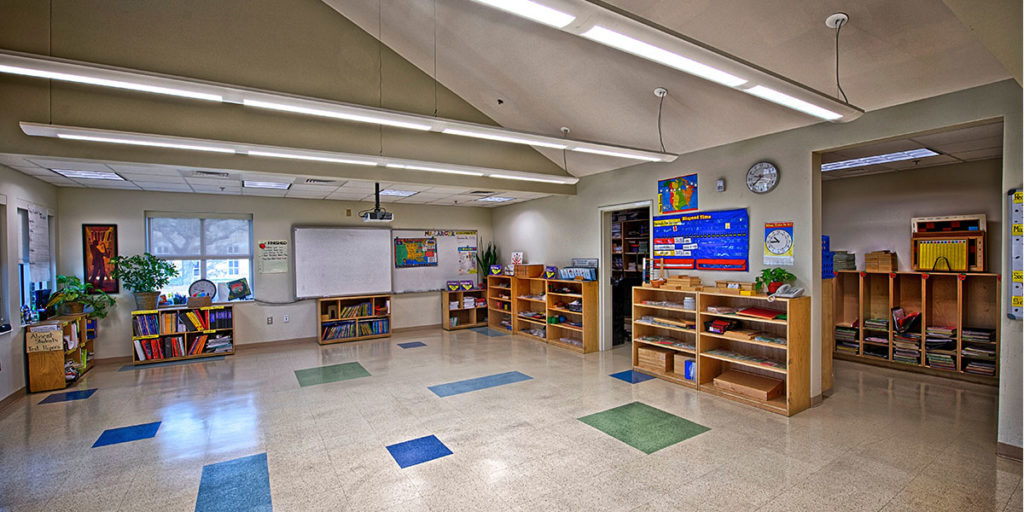
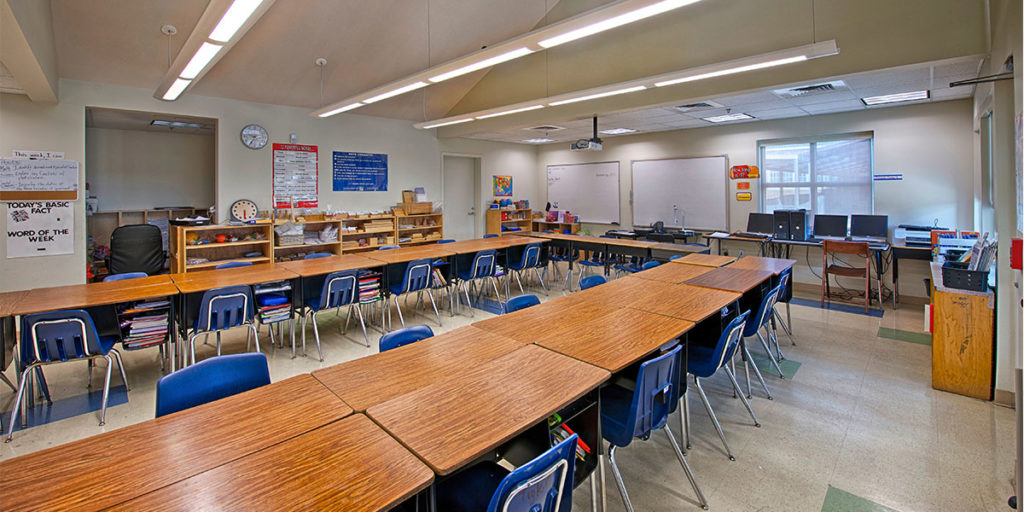
The $13 Million Judge Lionel R. Collins Elementary School Major Replacement and Renovation project included both renovations and additions to the historic Westbank school.
The renovation of the late 1920’s, original one-story 11,700 SF existing brick school building, formerly Ames Elementary School, yielded four multipurpose classrooms, two special education classrooms, one computer lab, and one Physical Education classroom.
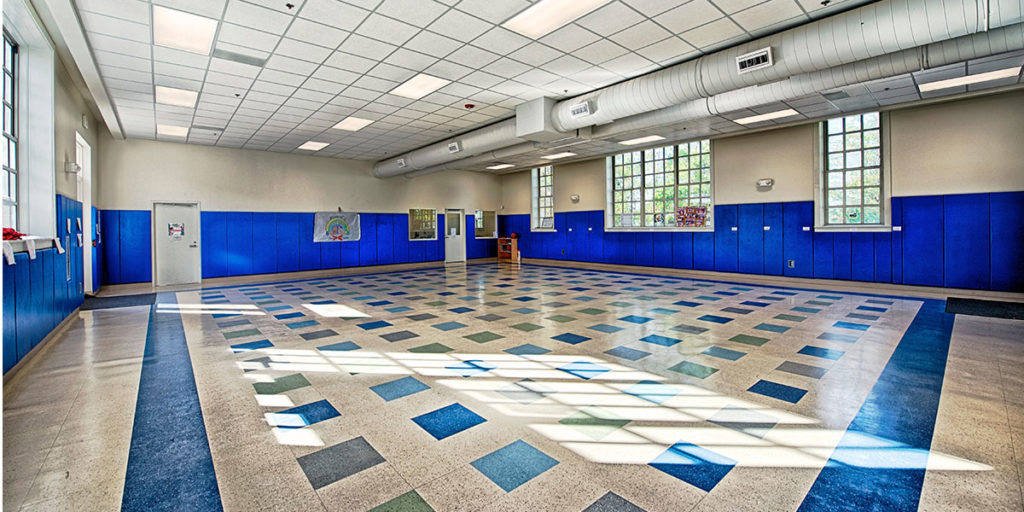
The renovation also provided a new Media center, a new kitchen and new Cafeteria/Auditorium that can accommodate 300 people in an auditorium setting. To enhance student safety, the school bus delivery and departure area functions are separated from pedestrian and automobile traffic. A new bus canopy was constructed in front of the original building.
Also included was the 48,660 SF addition of a new Administration building and three classroom pods designed to respect the scale of the surrounding Marrero residential neighborhood. The design provides 14 classrooms designed to support principles of Montessori teaching. Each classroom is provided with a Smart Board and an adjacent yard to supplement Montessori teaching methods.
The school’s main entrance was relocated to Ames Boulevard, with site improvements providing common lawn and physical education spaces.
VergesRome Architects delivered the project in Joint Venture with Imre Hegedus & Associated Architects.

New Orleans, Louisiana
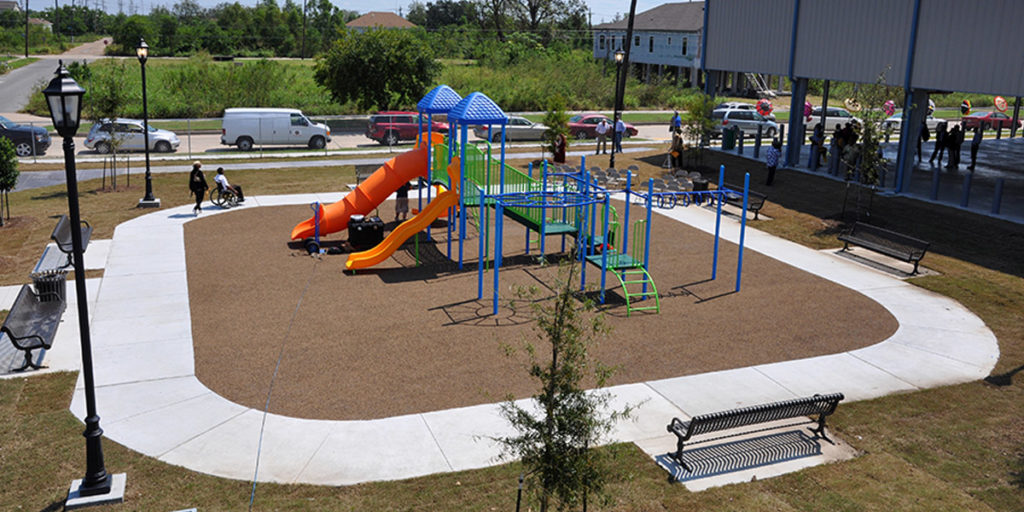
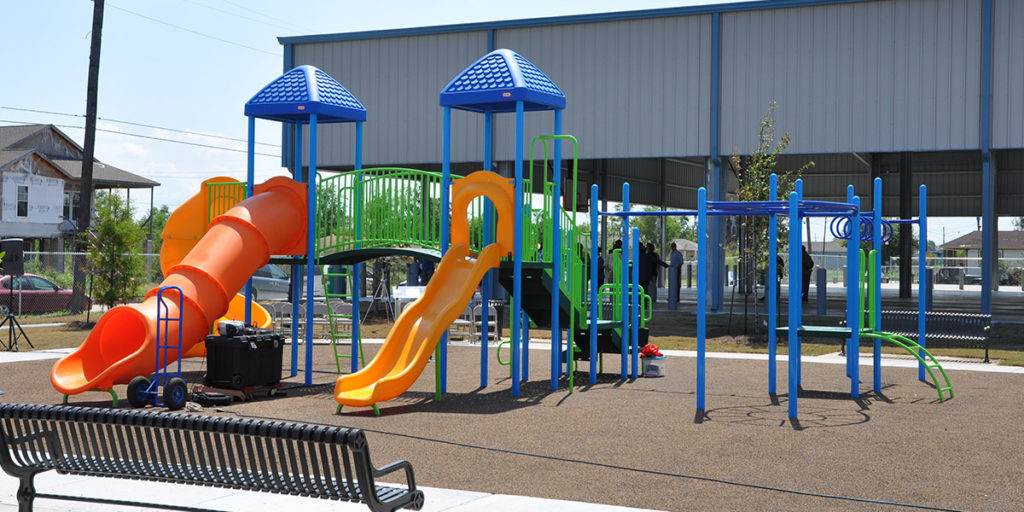
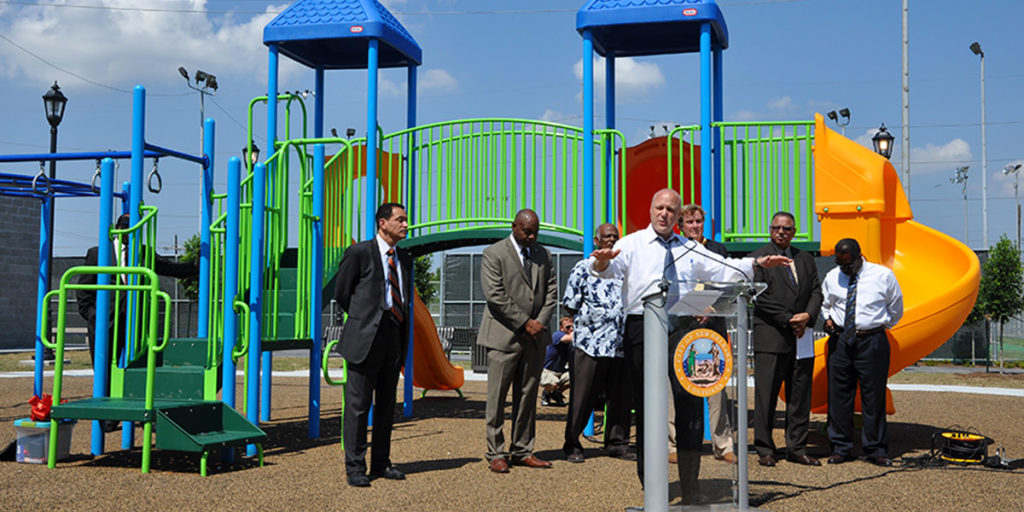
The site of the Oliver Bush Playground was a once-bustling 30-year-old park in the devastated Lower Ninth Ward that had been used as a staging area for U.S. Army Corps of Engineers equipment and materials in the aftermath of the floods. VergesRome Architects provided design services that helped bring a much-needed playground and gathering space to Lower Ninth Ward residents.
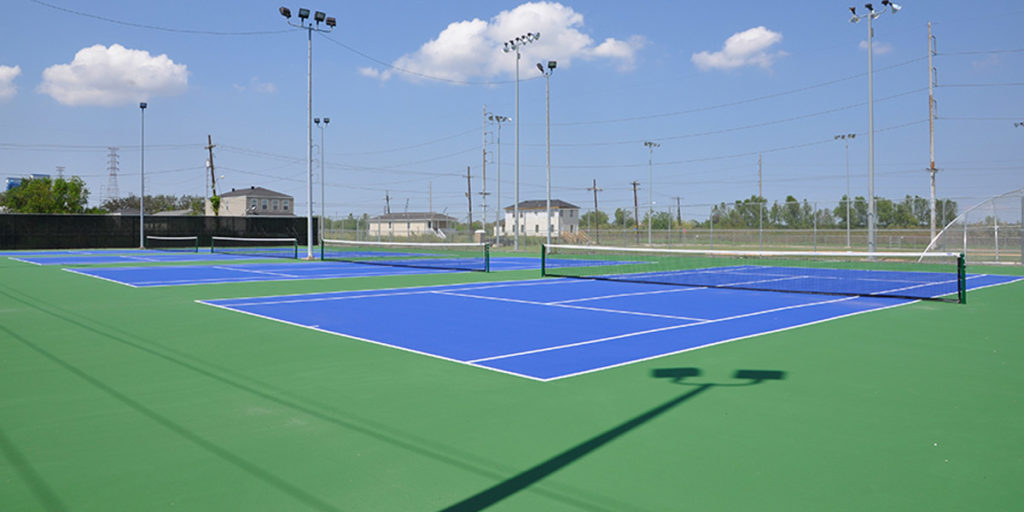
Site improvements included complete re-grading of the softball field, all new sidewalks and fencing, new lighting for the softball field, four tennis courts, and redesigned landscaping. All new sidewalks at the site are wheelchair accessible.
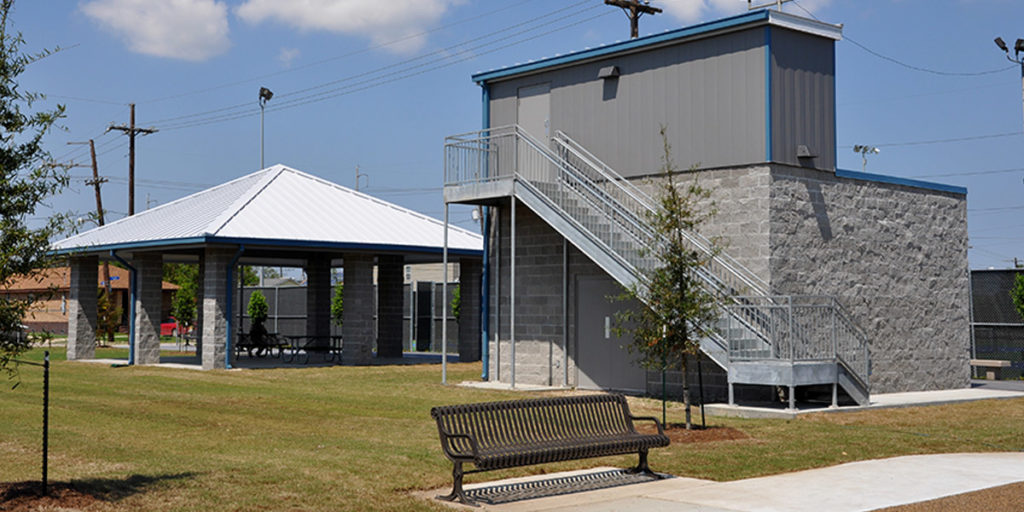
All electrical service and site lighting were upgraded. Tennis courts were stripped to the subsurface and given new asphalt play surfaces. A freestanding restroom building was demolished and rebuilt to ADA guidelines, with all mechanical and electrical equipment relocated to a new second floor to mitigate future flood damage and loss.
The basketball pavilion was demolished along with its slab and replaced by a spacious open shelter over two regulation-size basketball courts. A third, uncovered court was re-striped. New playground equipment was installed atop a rubber play surface, with new walkways and benches, and a new 900 SF open picnic pavilion was designed for the facility.
New Orleans, Louisiana
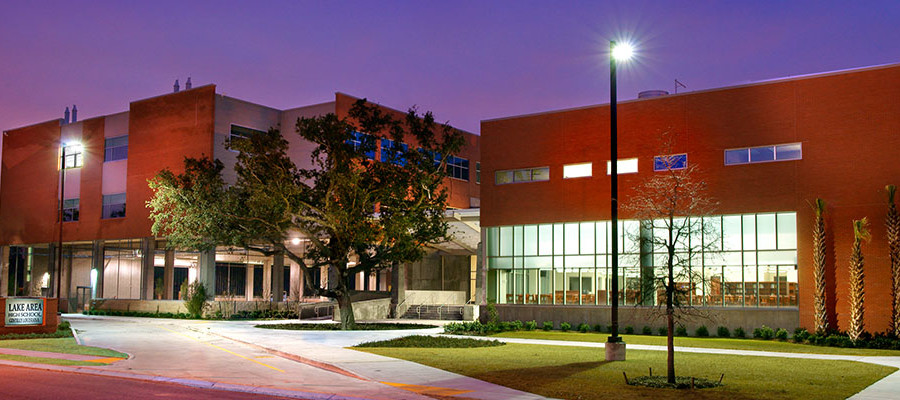
The Gentilly site for one of the Recovery School District’s first high schools built post-Katrina was the location of a middle school destroyed by 8-foot floodwaters. The compact 4.11-acre parcel presented challenges in site planning due to height restrictions and deep (50’) setbacks. The final design resolved parking requirements and employed a mitigation strategy by situating two floors of the school directly over a ground floor parking area. The school was built at a cost of $36.5 Million following a successful six-month fast-track design process. The 174,000SF school, opened to students in January 2010, achieved LEED® Silver Certification for its sustainable, energy-efficient design and construction.
The floor plan consists of two zones separated by a common area with an atrium. Natural daylighting is used in many spaces within the school. A flexible floor plan with retractable walls and highly functional classrooms and laboratories will readily accommodate future changes in curriculum and instructional approaches. To meet current and future technological demands, every student desk is equipped with a computer.
New Orleans, Louisiana
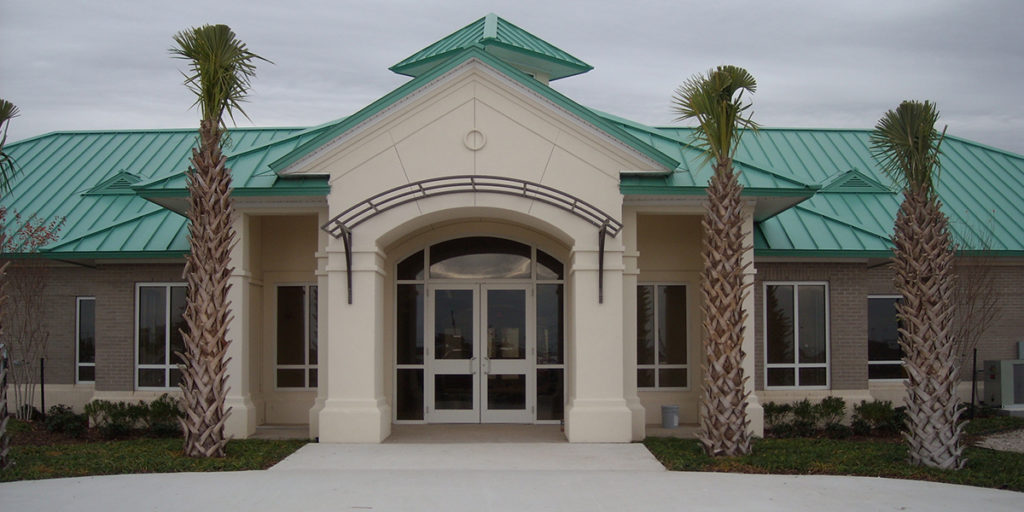
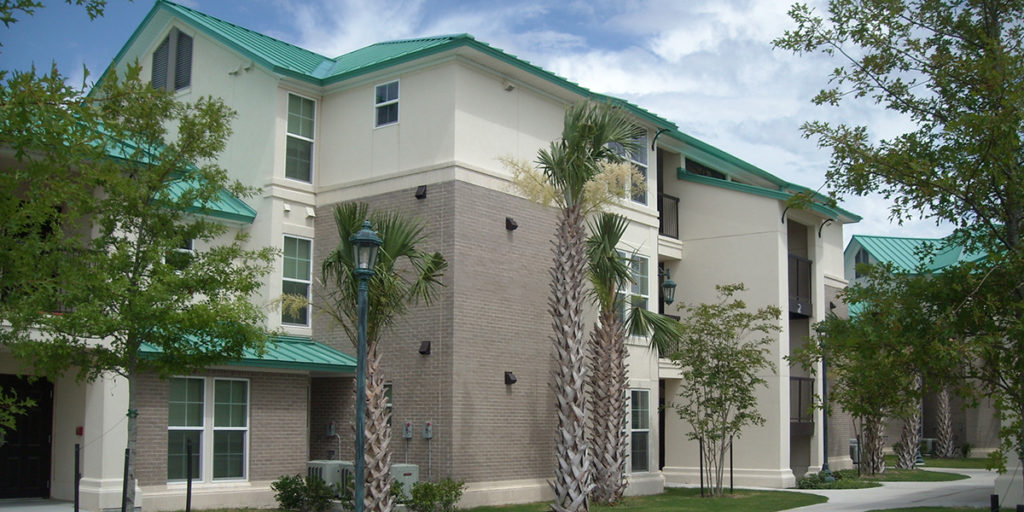
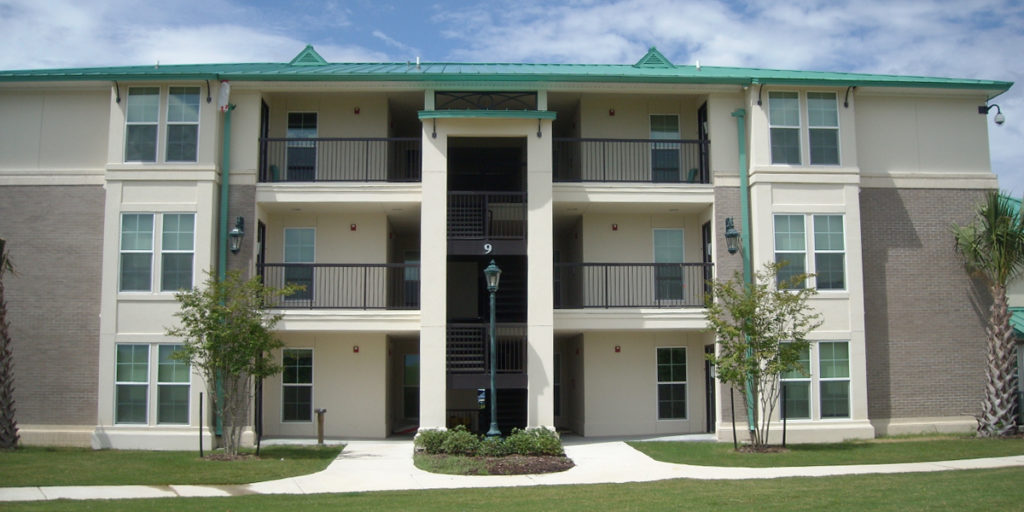
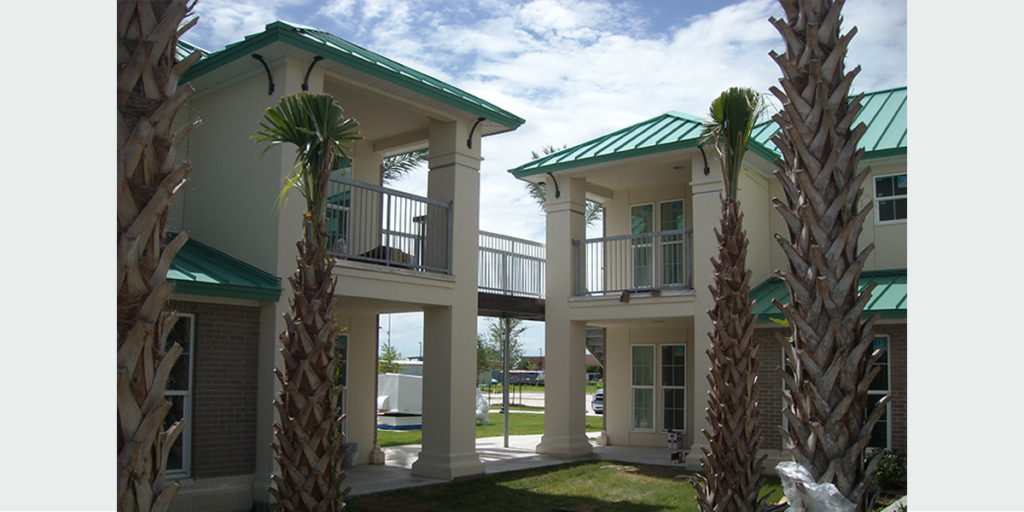
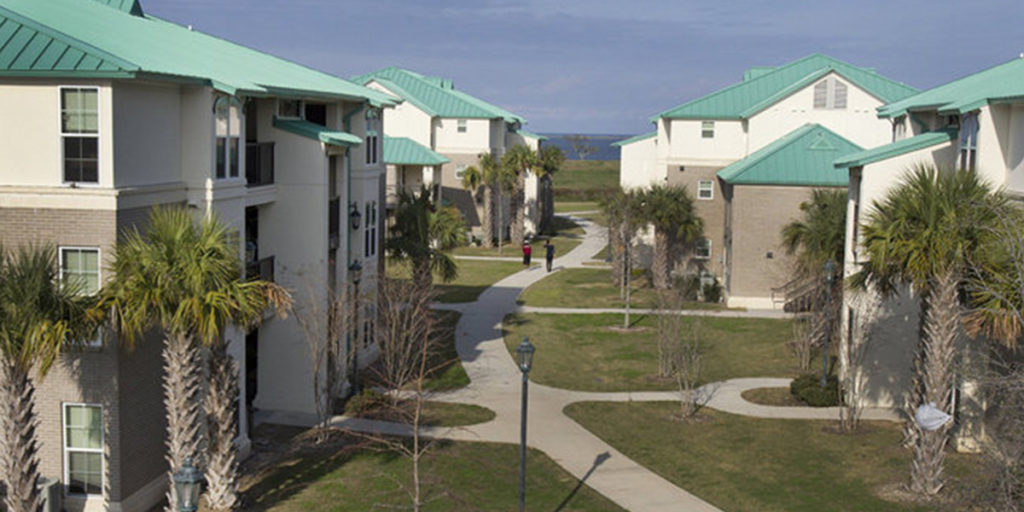
VergesRome Architects, in joint venture with Bani Carville & Brown Architects of Baton Rouge, designed the new faculty and student housing complex at Southern University New Orleans, an important milestone in the university’s recovery and rebuilding process following Hurricane Katrina.
This state-of-the-art student housing facility was the first such facility in the history of the suburban New Orleans public university, and with a final construction cost of over $39 million, it was also the largest construction project in the 50-year history of SUNO. The project encompasses a total of 21 buildings: 19 three-story apartment buildings, a recreation/ activity building and a service building. The 700-bed housing complex is situated on the school’s 17-acre campus near the south shore of Lake Pontchartrain and was designed to provide students with views of the lake and the New Orleans skyline.
Saint Benedict, Louisiana
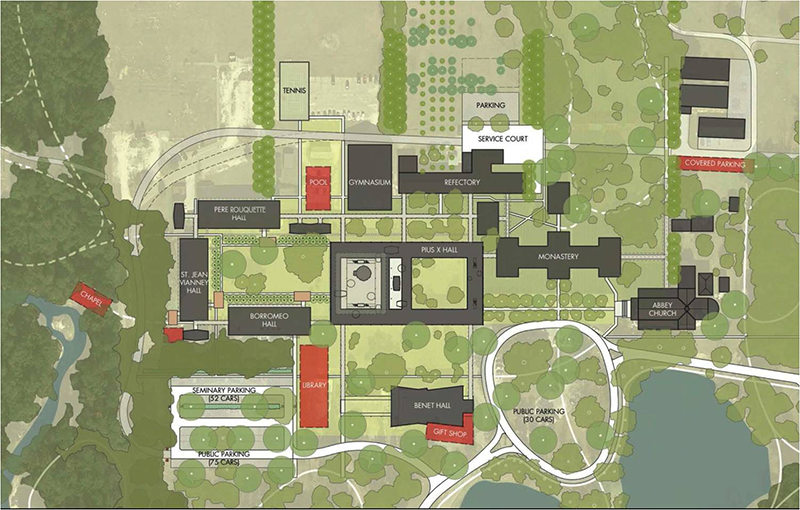
VergesRome Architects was retained by Saint Joseph Abbey and Seminary College to assist with their Strategic Plan, looking ahead to the next 100 years for the monastery and seminary, focusing on future and existing facilities, site planning, and protection of the Monastery’s cloister. Multiple stakeholder groups and the Strategic Planning Committee worked collaboratively to achieve a unified vision of operational, educational and facility goals.
VRA collaborated with nationally renowned Landscape Architect, Reed Hilderbrand, integrating proposed architectural building conversions and renovations with planned improvements to campus pedestrian and vehicular circulation, site lighting, and creation of special landscapes throughout the campus. A new chapel for seminarians is in design for a wooded site overlooking the river behind Vianney Hall. The design will correspond to the campus’ Mid-Century Modern vernacular – clean and clear aesthetic, materials, and scale that support contemplation, vocation and prayer.
VergesRome Architects and Reed Hilderbrand developed design solutions that capitalize on the unique architectural features and landscape opportunities of the Seminary campus, unify campus circulation and function, and bring back the Monastic “cloister.”
Mandeville, Louisiana
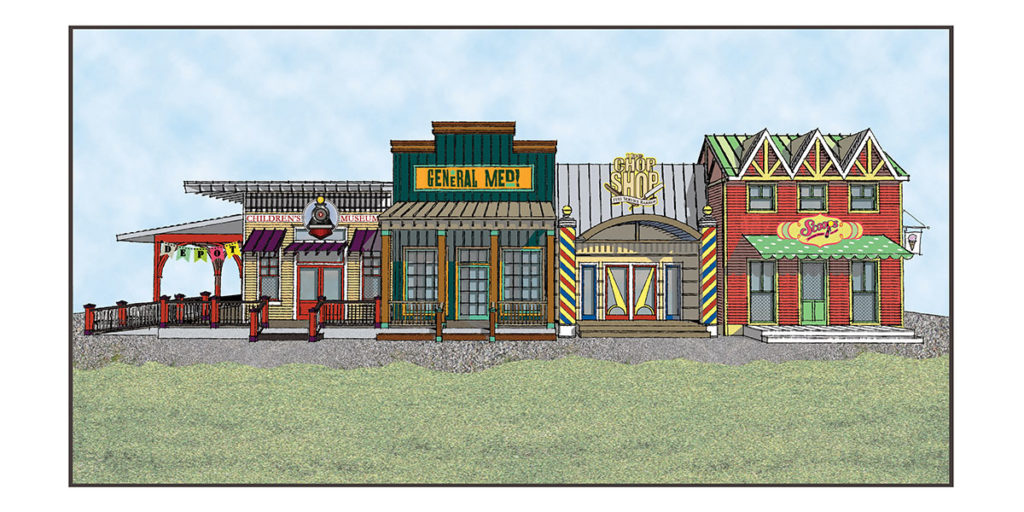
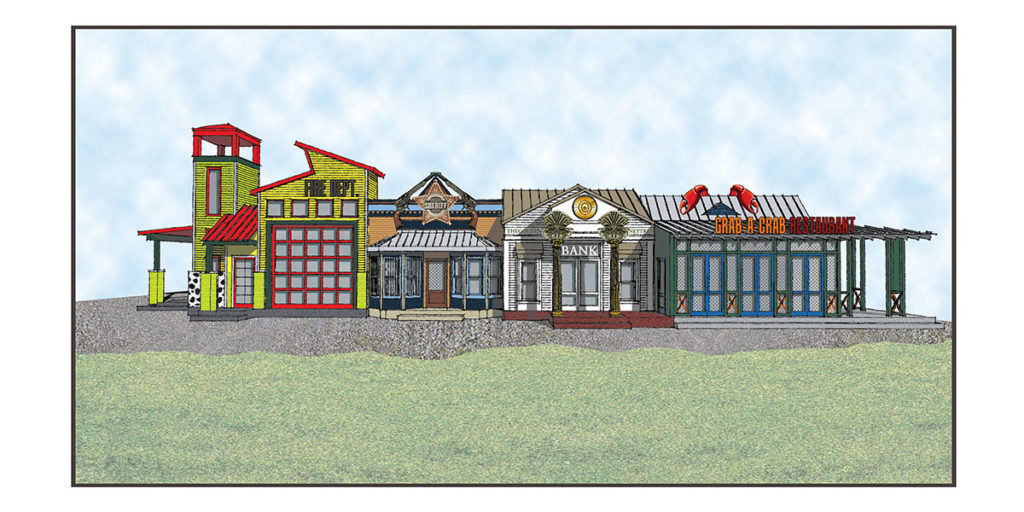
Envisioned as an entertaining, educational venue at the popular Tammany Trace Trailhead recreational rail trail, the design of Kids Town at Tammany Trace is intended to reflect the vernacular architecture of the Northshore, with influences of Gulf Coast colonial Louisiana architecture. The new miniature town, financed through the Tammany Trace Foundation, sponsors, and private investors, is now under construction at the Koop Drive Trailhead.
Kids Town design draws inspiration from the cultural fabric of the early days of what was once the nation’s largest railway and reflect a typical stop along the way. A Fire House, Bank, Mercantile and Ice Cream Saloon are among the attractions.
Whimsically designed as if imagined through the eyes of a child, Kids Town will be a place where children will expand their imaginations through interactive play.
Scaled to children, Kids Town allows them to play grown-up in an imaginative setting, being a Sheriff, Firefighter, merchant, banker, railroad engineer, hair stylist, barber or chef. Fostering independence in a safe environment, Kids Town includes a Town Square with a water feature, situated within a tree park, for families to relax in the shade while watching their children laugh, learn and explore.
The Railroad Depot at Kids Town will also serve as a temporary location for the Children’s Museum of St. Tammany while its permanent home is built along the I-12 corridor.
Ground was broken for Kids Town in summer, 2014. Construction is expected to take two years.

Covington, Louisiana
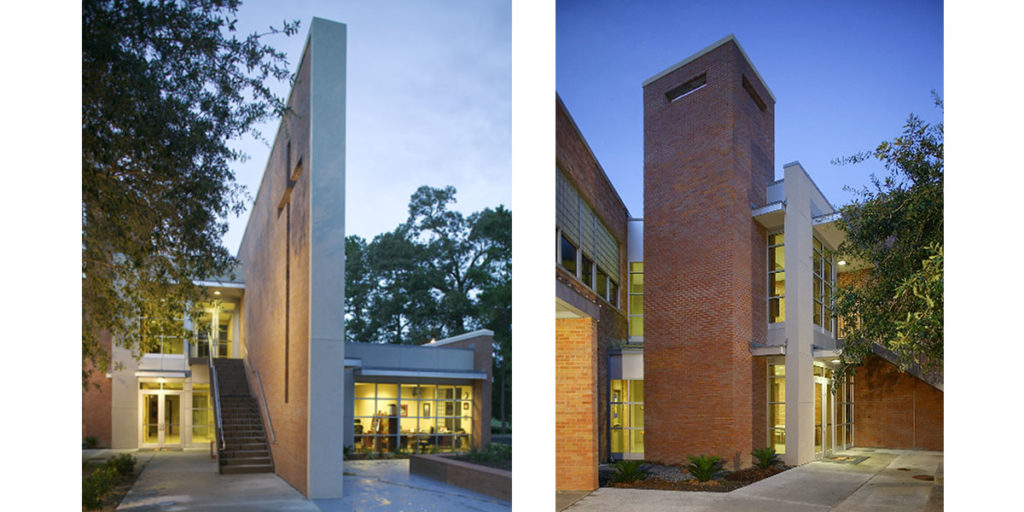
At the heart of the campus in Covington, Louisiana, the Academic Building at St. Paul’s School received a new look and layout in this progressive renovation and addition.
Taking cues from the existing driveway entrance, the new addition set up a formal entrance for the building, strengthens the master plan, becoming a focal point for the campus. The large brick wall, pierced by an open crucifix, served to both unite the older edifice with the new addition and to provide a dramatic entry statement as it extends toward Founders’ Circle, symbolizing the mission of the Christian Brothers: faith and zeal.
Modernization and improvement of the Academic Building, first dedicated in 1950, into a state-of-the-art educational environment required upgrades not only to the physical structure of the facility, but also to all mechanical, electrical, lighting and plumbing systems.
Within the existing building footprint, the original chemistry lab was refurbished and joined by four new science laboratories and space for three additional classrooms.
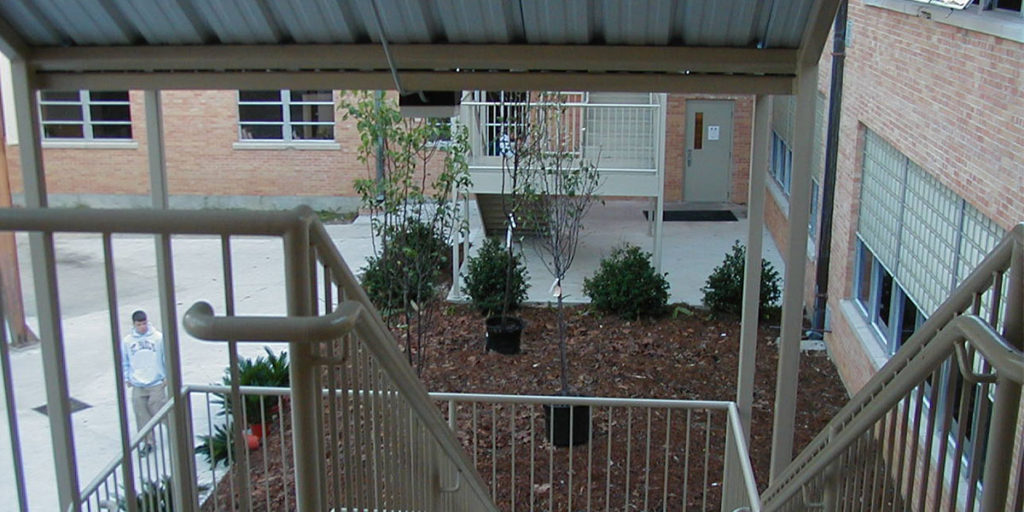
To accommodate Academic Department needs and growing enrollment, the new addition provided new reception facilities, administrative offices, conference area and lobby, as well as an elevator and new staircases for improved student traffic flow.
New Orleans, Louisiana
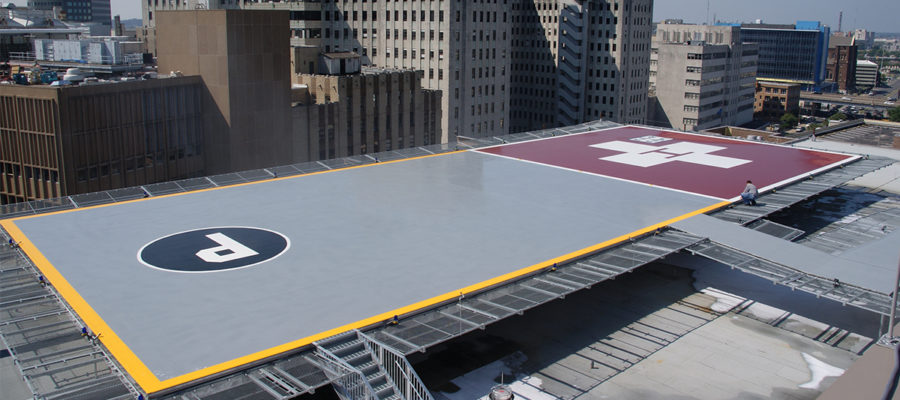
Tulane Medical Center decided to build its first Helistop when the need became apparent after the storm and flood events of 2005. VergesRome Architects worked with Tulane Medical Center to develop five options for rooftop locations. The final location situated the Helistop atop an eighth-floor rooftop, 120 feet above ground level. The $2 Million Helistop can hold a Black Hawk Helicopter and is used for patient transfer.